A Year On

Last week was a strange one for me.

It was Summer Fair and Sports Day at Twiglet’s school, both held under looming grey skies and the constant threat of rain. The conditions couldn’t have been a greater contrast to the weather of the previous year, yet I was happy.

I remember last year sitting on the school field in brilliant sunshine, listening to the chat and laughter of other parents, cheering on my son but feeling utterly alone. We had just had the results of Pudding’s MPS screening test, and although we couldn’t be certain which of the conditions he would end up being diagnosed with I had my suspicions; none of the options were particularly encouraging.

I hadn’t spoken to Hubby about the diagnosis before then, as he had too much else to think about with work. The evening after we heard that positive result though, he had asked me, ‘So what is the worst case scenario?’ And I had told him, and watched the news hit hard, and held him as he sobbed.

It is hard now reading back over what I wrote in those early days. The news had peeled away everything else, leaving me raw and terrified, but unable to blurt out the unspeakable to anyone except a close few. The summer that followed was unbearably long, full of stressful appointments and assessments, and I felt like at any moment I would fall apart.

At the time it was impossible to believe that we could ever be happy and normal again. Yet gradually we have reached a better place.  And this summer will be so much better than last. Having Pudding’s weekly enzyme treatment at home and not having to travel to Manchester as often makes life far easier. We have visits to Drayton Manor and Grandma’s house to look forward to, as well as a week away in Warwickshire. Our respite hours are giving the rest of the family a bit of a break and we’re planning fun things to do. Mainly though, I know that the days when I end up in a soggy heap will be the exception rather than the rule.

Those days will still happen, I know. One of them was on Sports Day. Just as I was tuckercongratulating myself on how far we have come, I got back home to news that a child from the MPS II community had passed away unexpectedly overnight. I didn’t expect to cry so much – I had never met him and had had very little contact with his family. But cry I did. I cried for his parents and brother who are facing this awful loss. I cried for the other MPS families who will be hugging their own children close and wondering if it will be them next. I cried for those who have only lately heard about MPS and are wondering how they can cope with anything as terrible as this. And I cried because sometimes that is all you can do.
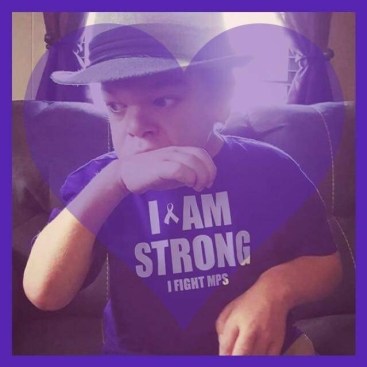
R.I.P. Tucker  (2000-2016)
The BFG

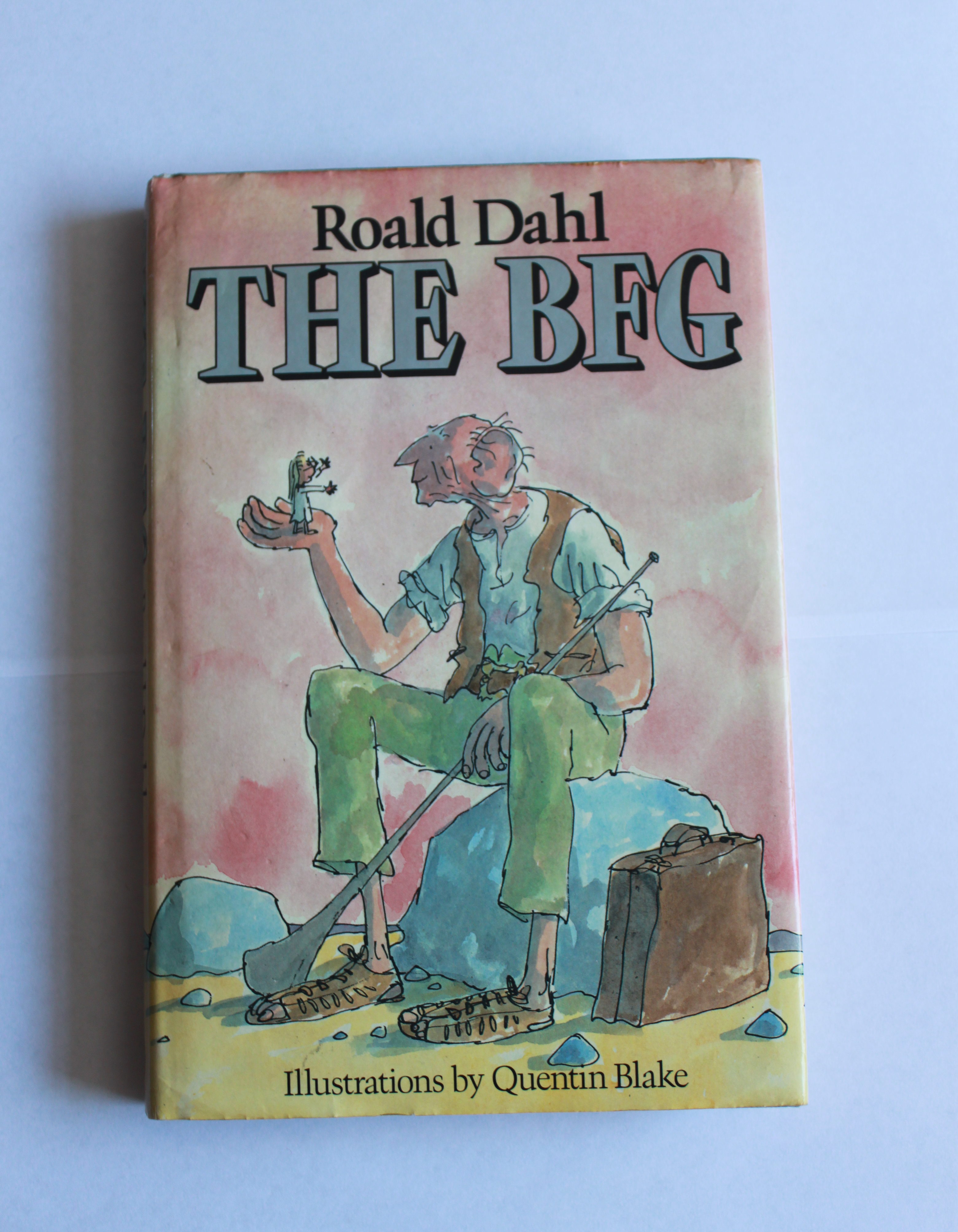
IMG_8111Once upon a time in a place not so far from here, a little boy was bursting with excitement. He had just met a real live author and now had a shiny new copy of a book signed by this famous man. His parents told him to look after the book as it was special, so he did. He read it carefully, marvelling at all the delumptious words, then he put it away on his bookshelf.

Years later, and that boy had grown into a man. He got married and had two boys of his own. As the eldest son grew and developed a love of stories, the man got down his book from the shelf and they started to read it together. Until this strange new invention called the interweb told the man that the book could be worth some money. The book was returned to the shelf and a less whoopsey-splunkers paperback was purchased.

Then the man’s second son was diagnosed with a rotsome genetic disorder. They got through the next year somehow. One day, the man suggested to his wife that they sell the book to raise funds for the people who help his son, and his wife said it was a scrumdiddlyumptious idea.

After all, what’s the point of holding onto a book – however precious or important? Family is what really counts.

So, I’m becoming an expert on the condition of old books. Is it a first edition? Yes. Is it a first printing? Ooh, yes. Is that foxing or tanning on the upper edge? Bit of both. Any marks on the pages? A spot on the signed page and one on page 26. The level of detail that’s needed is remarkable….

We’ve received an offer from one bookseller already, but can we do better? I don’t know – watch this space. (Proceeds going to the MPS Society. More detailed photos available to interested parties – comment or message me for details!)

In the meantime, Twiglet is really looking forward to the film coming out. Are you?

Portage

I’ve had on my list for a while to blog about Portage but wasn’t planning on writing it this week. Then I found out today that it’s Portage Awareness Week so what better time really?

Most people not in the SEN world will probably have no idea what Portage is. I certainly didn’t before Pudding. When our Speech and Language Therapist first mentioned mentioned the word I had visions of learning something about heavy lifting (probably very useful in our case).

The title actually comes from the town of that name in Wisconsin, USA, where the first scheme was set up. A much better name for it would be The Service That Every Special Needs Family Should Have. But I guess they thought that would be a little long-winded.

So what exactly is Portage? It’s a weekly (or fortnightly) home visiting service for pre-school children with developmental difficulties or disabilities with a strong emphasis on inclusion and partnership.

For us it started before diagnosis, before MPS was even mentioned and it very quickly became a highlight of our routine. Every week for an hour (usually longer – our portage Home Visitor, K, was never very good at leaving) we could focus on the positives. Having got used to reports saying ‘P has limited understanding of instructions’ or ‘P is behind his peers in all areas of development’, it was so lovely to celebrate achievements instead. And celebrate we did. K always had genuine pride in her eyes when I told her what improvements Pudding had made over the last week.

It is a wonderfully family-centred service with each session including child-led play, structured learning and time to focus on families’ concerns and priorities. And when I say structured learning, I don’t mean they sit the child down and start teaching the alphabet; it’s a way of breaking down activities into simple steps and looking at the next stage to work on. For instance one of the first activities Pudding was introduced to was threading (which he hadn’t had much success with previously). Home Visitors have access to a wide range of toys and resources that they can loan to families, so Pudding was able to start with a very easy set of beads and then worked through more and more difficult challenges to become a threading expert!

So Pudding benefited enormously from the focus on small steps to learning. But I would say that possibly I was the one who got the most out of portage. K was one of the only people I told about MPS in the early days, even before I told Hubby. Every Friday I would pour out my fears and my worries to her while Pudding played happily or worked on our latest targets. Every Friday she would cry alongside me and my load was lightened. This really did help me get through the worst of times.

As time has gone on, the focus of our sessions has changed again. We have been supported through the process of My Support Plans, EHCPs and now transition towards scIMG_7554hool. We’ve been given help and advice in so many different areas that I wouldn’t otherwise have had a clue about.

We’re coming to the end of our time with portage now and we’ve been so lucky to have access to this service – in many areas it has suffered greatly from austerity cuts.

Portage taught me a number of important things: how to break an activity down into small steps and celebrate each little achievement; what other services we could access; that as a parent I’m the expert on my child. But most of all it taught me that I was already doing a good job. And that is something that every parent needs to be told more often. Perhaps in the most ideal world this service would be extended to all parents in need of it.

Hoorah for Portage!

(For more information on the service, visit the National Portage Association’s website.)

No-man’s land

It’s a strange place we find ourselves at the moment.

Pudding has a serious genetic condition – those with the severe version of MPS II (Hunter Syndrome) are not expected to live beyond their teenage years – yet he is not actually ill.

Last summer when it seemed like there was never-ending roadworks going on outside our house, one of the workmen knocked on the door to apologise, saying ‘I understand you have a sick child at home’. I was livid. Not with him. But with the person that had used my child to justify their own complaints about the noise. I realise now that I was also reacting against this definition of Pudding as ‘a sick child’.

Yes, we have all the hospital trips and treatments and other appointments. Yes, there are slight issues at the moment with his airways, joints, heart and so on.  But he can still run, eat, communicate in his own way and carry on a vaguely normal life. Any stranger watching him shriek his way around the playground would see a boy who has his differences but to all intents and purposes looks healthy.

Unlike those with more advanced MPS, he is not needing a wheelchair full-time or feeding tube. I know we’re lucky that we don’t have to go there yet.

A few people have asked me lately how the trial is going; is it working? The simple answer is we won’t know for a while. Pudding has impressed us with a few things in recent weeks, enough to give me some small hope that it may be making a difference. But the normal course of severe Hunters is for children to continue developing until the age of 4 or 5 (he was 4 in February) before reaching a plateau and then starting to lose skills. Therefore it is impossible to put progress down to any particular factor right now.

So for now, we wait.

This no-man’s land is home for the foreseeable future, so I’m settling in for a long stay. There are certainly worse places to be.

September

September, when Pudding starts school, suddenly seems awfully close.

I suppose most parents probably face some anxiety around this time, but possibly even more so when your child has additional needs. Occasionally I have had little wobbles about our decision to send him to our local mainstream school; usually when somebody says, ‘You’re sending him to mainstream? Really?’ But that hasn’t happened very often. Mostly people have been very supportive, recognising the positives.

One thing did happen a couple of weeks though that made me think we’re doing the right thing. After playing in our local park for a while following school run, I ended up leaving in tears when some other boys called Pudding ‘annoying’ and ‘weird’. To be fair, he was being annoying as he had apparently just spoilt the game they were playing. But it cut me to the quick. I watched him smiling and chatting at them for a while and I could see my sunny child inviting them to engage with him in the only way he knows how. To them, though, he was too obviously different.

I knew at the time I should have used it as a teaching opportunity, explained to them why he was acting ‘weird’ and invited them to understand and accept him despite those differences. Rational behaviour isn’t always easy though. As I heard the words, and more importantly the tone in which they were said, I knew beyond a doubt that this would not be the last time I would be hurt like this. And it was me that was hurt, not him. He, thankfully, has no idea that the whole world doesn’t love him.

Now, separated from the incident by a bit of time, I can understand why they acted the way they did. When you’re a kid, you learn the rules through play and socialisation and parental/teacher modelling. You learn to take turns and share, you learn to lead or follow at different times. You learn to gauge others’ strengths and abilities in games or challenges. You expect others to know the same rules and conform to them. And when someone comes along who is a bit different, it challenges all those norms of behaviour and acceptability.

Like many people I grew up in a world where disability of any sort was very rarely seen. There would be the occasional TV programme that attempted to improve understanding, not always successfully – after Blue Peter featured the story of Joey Deacon, a man with severe cerebral palsy, children up and down the country used ‘Joey’ as the latest insult, copying his movements. I accepted this as normal, though as an adult now find it horrifying. (Not all adults seem to have learnt this awareness yet – Donald Trump notably using similar movements to mock a disabled journalist earlier this year).

At university I volunteered with a great student organisation called KEEN which ran sporting and social activities for children with additional needs. (Having just checked the internet I can see there are other KEEN groups around the UK and US.) I found it a great experience, but when paired with someone who had more severe communication difficulties I sometimes felt uncomfortable. With little awareness about what their particular condition entailed I would be desperately afraid of either talking down to them or of not making myself clear enough.

Now of course I have more knowledge and understanding. I would know to follow the lead of that child’s carer or have the confidence to simply ask.

Things certainly are changing and people with disabilities are a lot more visible in society these days though there is still a long way to go. A few years ago there was huge controversy when a new presenter started work on the children’s channel, CBeebies. You might think why – were they a drug-user? Turning up drunk? Swearing on air? No, Cerrie was enthusiastic, well-presented and great at what she did – the only ‘problem’ was that she had been born with a limb difference which led to some parents complaining that their children were being traumatised.

Yet young children are incredibly accepting. Pre-schoolers play happily with their peers who don’t share the same gender, abilities or ethnicity. I think it is only if they are not exposed to difference until later on that the suspicion of ‘otherness’ becomes apparent.

The point I’m making is that the only way people (myself included) learn to relate better to those with disabilities is by seeing them – on TV and in person – on a daily basis. The children who go to school with Pudding will learn that yes, he is different, but that isn’t anything to be scared of. Hopefully they will grow up into better adults than I did.

Believe me, I’m by no means sacrificing Pudding for an ideal of inclusivity. If mainstream appears not to be working for him, I will be more than willing to move him to the nearest special school (which we have already looked around). Until then, I simply believe that Pudding isn’t the only one who stands to benefit from his education. I have every confidence that he can teach others far more.

That conversation

For a long time now I’ve wondered whether we should be telling Twiglet more about MPS and what it means for his brother. Everything I had read about the subject suggests that the earlier a sibling knows about potential problems the better able they are to deal with it. Also, with Pudding going to the same school as him in September, inevitably more people will know about the diagnosis and there is always the possibility that someone, some day, will make an unthinking comment. I would never want to put him in the position of having to hear from an outsider what he should learn in the safety of our family.

But really, how do you talk about life expectancy to a six year old?

Every so often I have tried. I’ve edged the conversation round to Pudding and his condition and hoped that Twiglet would ask the question that could lead me into it. But that never happened.

So two weeks ago I did it. Twiglet made another comment about what Pudding will be like when he’s a grown-up and I bit the bullet. The conversation went a bit like this (should have written it down at the time):

Me: Do you know what the treatment he’s having each week does?

T: Nope.

Me: Well, if he wasn’t having it, all the gunky stuff would be building up in his body – the heart, lungs, everywhere. So eventually they would stop working.

T: So his heart wouldn’t be pumping blood around his body, and he wouldn’t have any more oxygen, and he’d stop being alive?

Me: Yes, that’s right. But he’s getting that treatment now, to keep it all working. And the treatment that he’s getting in Manchester – we hope that will keep his brain working too.

T: So he could get to be really old like me.

Me: That would be good. But even if it does work well, he may not get to be as old as you, because all the gunky stuff will have done some damage already.

T: OK. Can I have my Lego down now?

Hmmm. A little easier than I expected, but don’t know that he really got the message. Hopefully though, that seed has been planted in his mind, and he’ll have a little more understanding and knows it’s something we can talk about.

For now though, I’m resting a little easier.

(Anyone looking for a good book on MPS for children, I also really recommend ‘My brother, MPS and me’. It doesn’t talk about life expectancy, but has good clear explanations about the condition. I’ve already bought a couple of copies for school)

Donkey riding, donkey riding

It’s all too easy sometimes to look at the interesting things other families get up to in the weekends and holidays and feel a twinge of jealousy. Think, ‘We could do that too if we didn’t have Pudding in tow’. Well perhaps now we’re starting to access some respite hours that will be possible.

But also, there are some activities that have opened up to us simply because of Pudding’s special needs. One of those is donkey riding at the Leeds Donkey Sanctuary.

IMG_7958One Saturday every month (and extra dates in the holidays) they hold sessions for children with additional needs to come and interact with the donkeys. It was recommended to us by another mum and when we turned up the first time I had no idea what to expect. All I knew was that Pudding would be keen (as he loves animals), and Twiglet would probably steer very well clear (as he doesn’t).

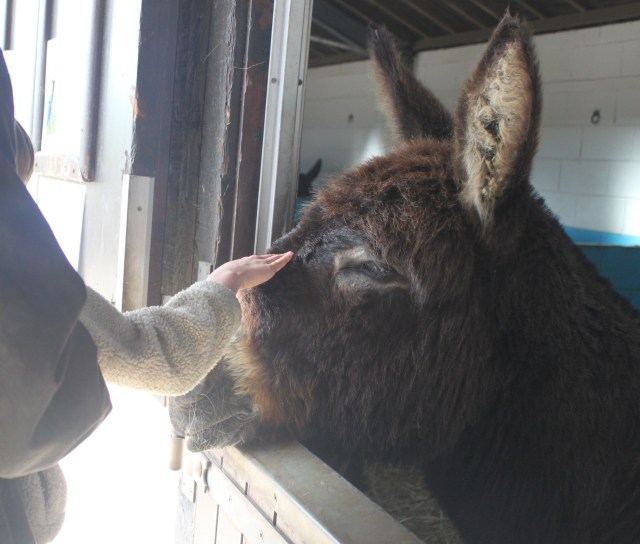
It’s a simple, no-frills, welcoming sort of place which is just perfect for what they do. After only a few times of going we quickly fell into a routine. First stop is the stable yard where we say hello to some of the donkeys and stroke them. And they are so very stroke-able with lovely soft hair and not as tall or scary as horses. Then we head inside to sign in and get our name stickers on. Just the other side of the hall there is a little outside play area with a swing and ride-on toys, which Pudding enjoys. Mainly though, he runs around shouting loudly and making sure that everyone, staff and volunteers included, knows there are donkeys through in the main arena.

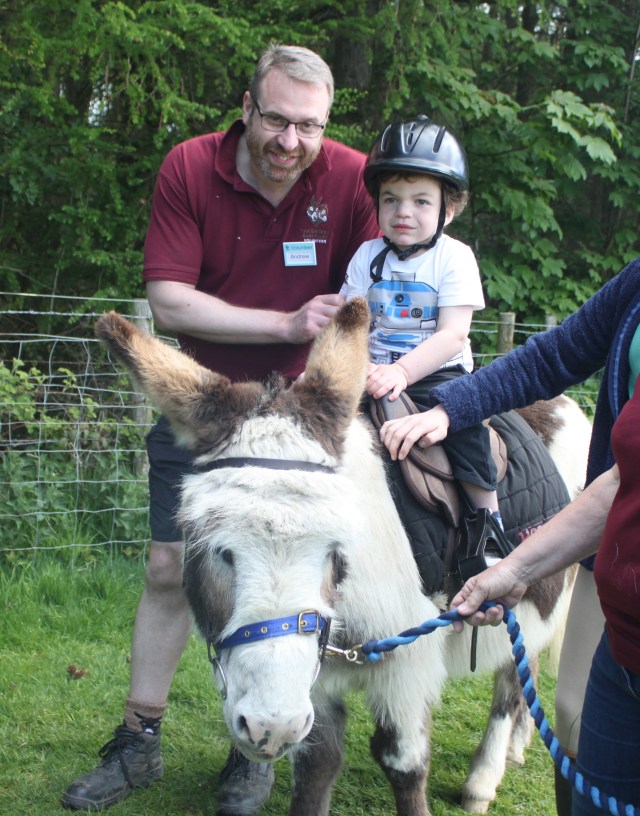
IMG_7963Soon it’s time to get helmets on and have a turn riding. Siblings are able to have a go too, and much to our surprise, on the second visit Twiglet announced that he would. Donkeys are apparently much more acceptable than any other animal.
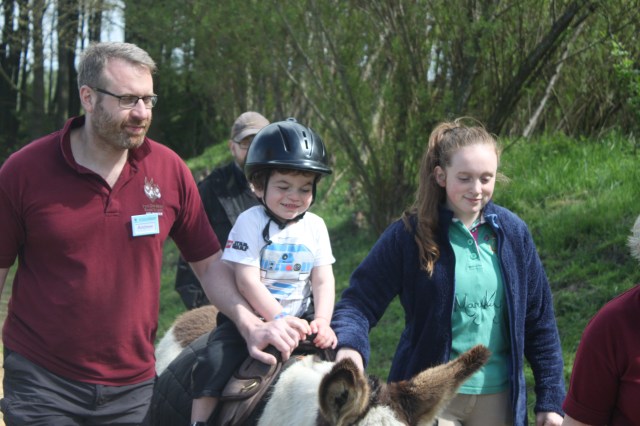
They ride around the arena supported by IMG_7973careful assistants, and have little challenges on the way that promote learning: for instance collecting different colour balls and throwing them into the matching bucket. If nothing else, Pudding can at least do the throwing part. On our latest visit though (first sunny time there) we got a ride outside, walking up a little lane and back through a field, IMG_7990spotting birds, dogs and of course more donkeys on the way.
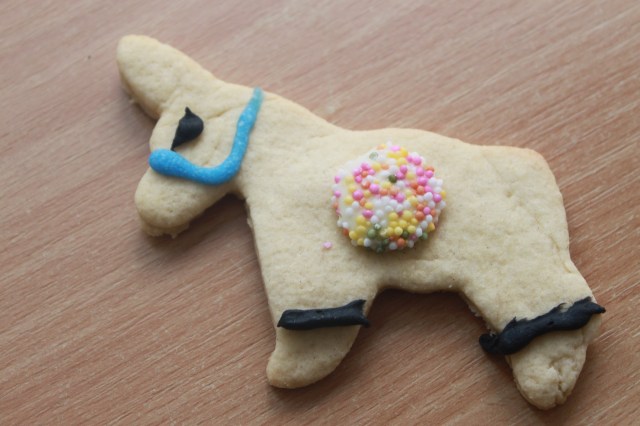
Then it’s lunchtime (ok, I admit, it’s sometimes only 11am) – fried egg or bacon sandwiches keep us all happy. And if I’m feeling generous it is followed by a piece of cake or donkey biscuit. Then back in the car for a sleep on the way home.

Nothing particularly exciting or adventurousIMG_7968; on the surface not much to assuage that jealousy I feel when looking at other ‘normal’ families. So why do I like going so much? It’s because it’s an activity we can share and enjoy as a family. It’s because Pudding can now sign and say the word ‘donkey”. It’s the feeling of belonging, knowing that we’re accepted there – it doesn’t matter if Pudding runs about or misbehaves.
And it’s because of Pudding’s very obvious enjoyment of these big furry animal friends. ‘Hey ho, away we go, riding on a donkey…’

(There are also six other Donkey Sanctuary centres around the UK, so go visit. I’m sure they’re all equally lovely!)

MPS Awareness Day

The day finally arrived and we all did well Wearing It Blue – even Hubby who stayed at home all day and didn’t see anyone.

The blue hair dye was somewhat unimpressive. I had hoped that it would take well on my white hairs (of which there are almost more than the dark ones these days) but I’ve basically ended up looking a little blue-tinged, rather than electric blue. But sparkly blue nails (thank you, Sister!) made up for it.

I’ve loved seeing all the pictures on-line of friends, family and other MPS families wearing blue (or purple); coming together to show their support. Thank you, every single one of you!

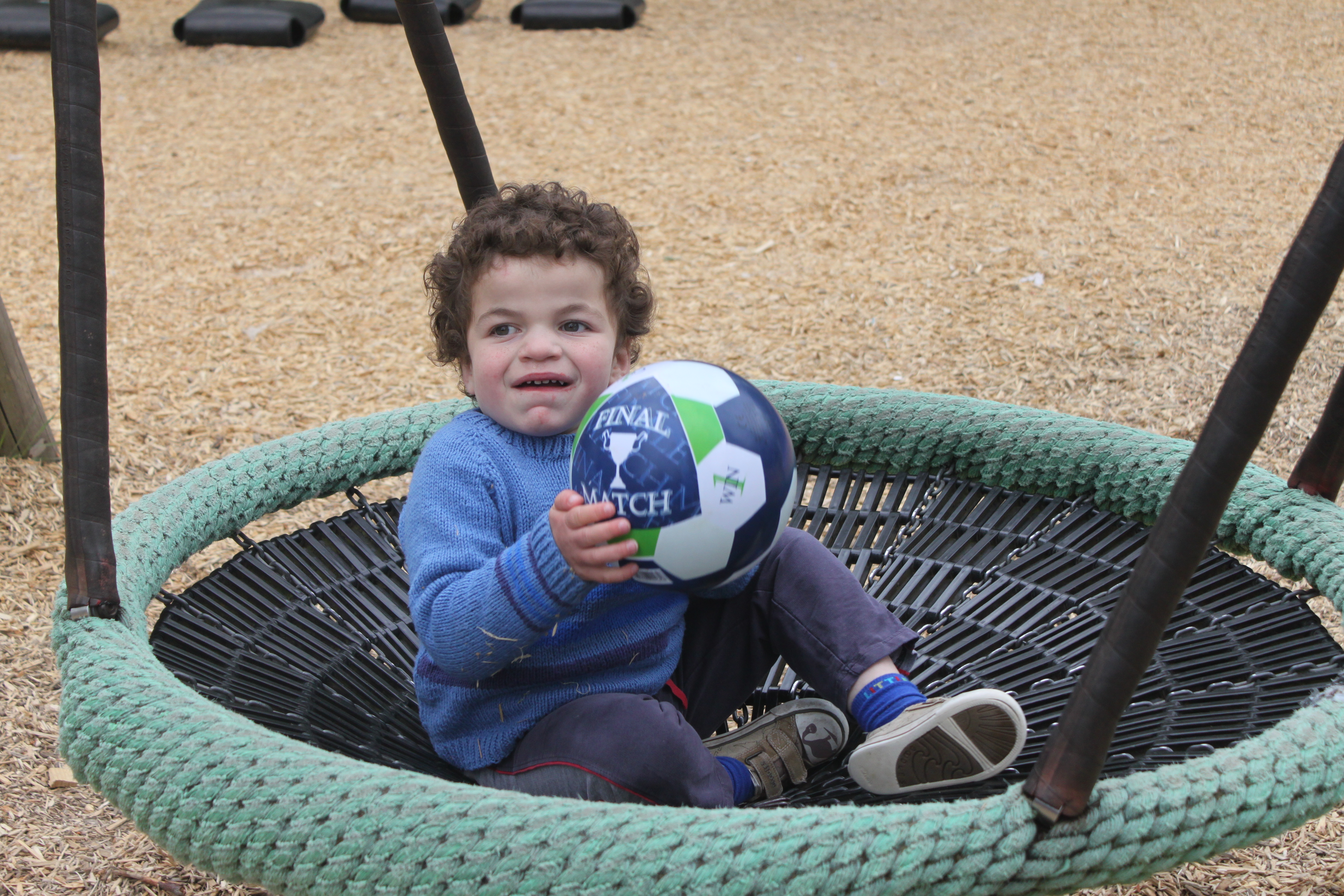
Pudding sitting in a bucket swing holding a ball.

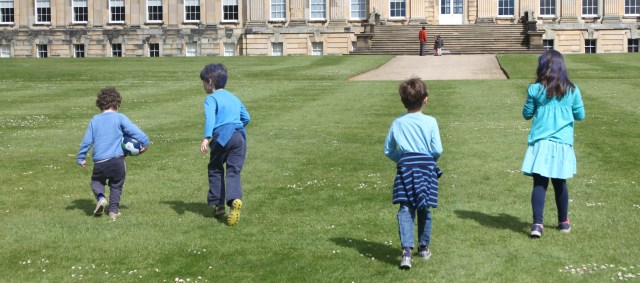
It seems appropriate that on MPS Awareness Day itself, Pudding has just had the best time being completely unaware of it all: running around with his brother and cousins, feeding his sandwich to the ducks, playing ball, running in the wrong direction and saying hello to strangers’ dogs. This is what life is all about.

IMG_8042

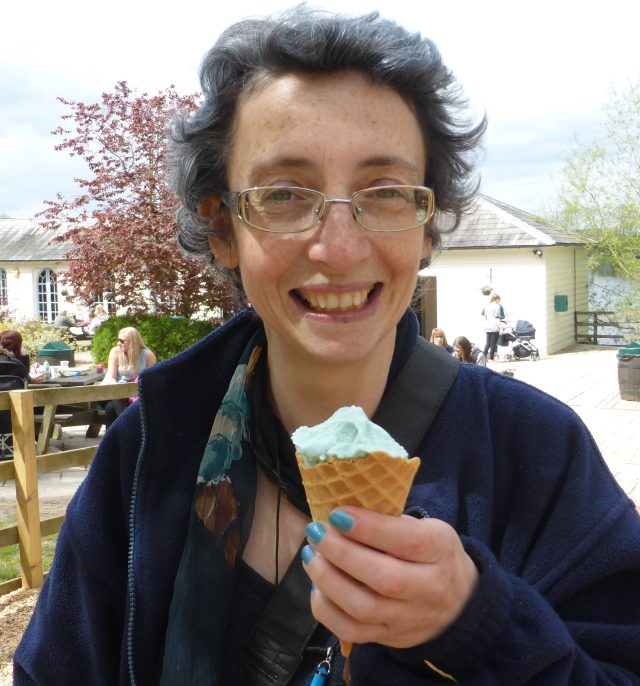
Oh, and I even had a blue ice-cream. When I saw ‘Blue Banana Blitz’ was one of the flavours on offer, I just had to!

P1080612

What does MPS mean?

When a chance meeting leads to questions about Pudding I often say he has a genetic disorder that causes his development delay. People can be genuinely interested and ask for more information, wanting to know the name of the condition. My heart sinks a little – they won’t have heard of it, just like I hadn’t a year ago – but say the word anyway. Mucopolysaccharidosis. They look a little taken aback and ask what that means. Usually I give the official answer: it’s a progressive condition; due to a mistake on his DNA he is missing a vital enzyme; waste products build up all over his body causing a range of problems. But that explanation leaves so many blanks. It fails to explain what MPS II (Hunter Syndrome) really means to us.

It means pinning him down for needles and blood pressures and medicines every week. A four-hour infusion every week, for the rest of his life.

It means feeling guilty. Guilt that I don’t do enough to stimulate him, guilt that I sometimes snap at him when it’s not his fault, guilt that I might have caused this whole thing by having him later in life.

It means living with the possibility that our child will die before us.

It means being grateful for every long-awaited milestone or achievement.

It means becoming a walking calendar; balancing preschool and social outings with weekly ERT, trips to Manchester, appointments with occupational therapy, speech and language, physio, ENT, portage…the list goes on.

It means mourning the expectations I once had for him of girlfriends, university, a good job and maybe children of his own.

It means never leaving anything on any surface unless we’re happy for it to be thrown or eaten.

It means pacing hospital corridors waiting for him to come round after another operation and dealing with his distress when he doesn’t understand why he is feeling so rotten.

It means wondering each month whether his body will continue to tolerate the new drug that is our current best hope.

It means feeling I have to be strong, but sometimes failing.

pudlet

It means every time I see his gorgeous round face I am reminded of the condition that has sculpted this broad nose and large forehead.

It means being hit and kicked and pushed over by a boy whose size and strength is not matched by his understanding of how much he can hurt.

It means having certain dates etched on my mind forever – the date we heard about MPS for the first time, the date he got the final diagnosis….

It means our world will never be the same again.

It means he has charmed over 50 health or education professionals in the last year (the number has gone up since I last wrote about it in September)

It means tears. So many tears.

It means giving in to the TV as babysitter far more often than I would like as sometimes nothing else will calm him down.

It means learning to live in the moment and enjoy simple pleasures.

It means watching him like a hawk when we’re out anywhere in case he hurts another child or simply runs off.

It means grinning from ear to ear when I hear him chuckling at the TV, or a game of chase with his brother or when splashing in the bath. His laughter is so joyous and free.

It means holding faith in the science of the future that could save lives. And being grateful beyond measure that this is a possibility for us when for many others it will have come too late.

It means knowing the strength of love and support that we have from family and others.

It means accepting a new normal over and over again.

It means never knowing quite how to respond when his brother talks about what Pudding will be like when he’s grown-up.

But of course, I don’t usually give those answers to the person asking. Because if I bared my heart in the playground, or the cafe, or wherever we are, I would probably never stop talking about it or I’d start crying. And I’m sure they don’t really want a soggy Hunters Mum on their hands. And after all, when it comes down to it, MPS is everything and nothing. Pudding is still our little round lump of gorgeousness and nothing – certainly not this diagnosis – will ever change that.

***MPS Awareness Day – May 15th – Wear It Blue (or purple). Share on social media***

Surprises

I wasn’t actually intending to post here today, but Pudding and I had such a nice surprise this morning that I had to.

It was one of those mornings where we got back from the school run and Pudding flitted from one toy to the next in a seamless flow. I tried to shoehorn in a little bit of teaching – ‘Yes, it’s a car, a RED car’ – in between avoiding getting hit, but after a while I looked at the clock and had one of those heart-sink moments when I saw it was only 9.15. (My fault. I was too tired to keep up the enthusiasm after another evening out. I know, get me!) After countless demands for TV or food, I gave in and got the tablet out. Even that wasn’t too successful as it kept stopping.

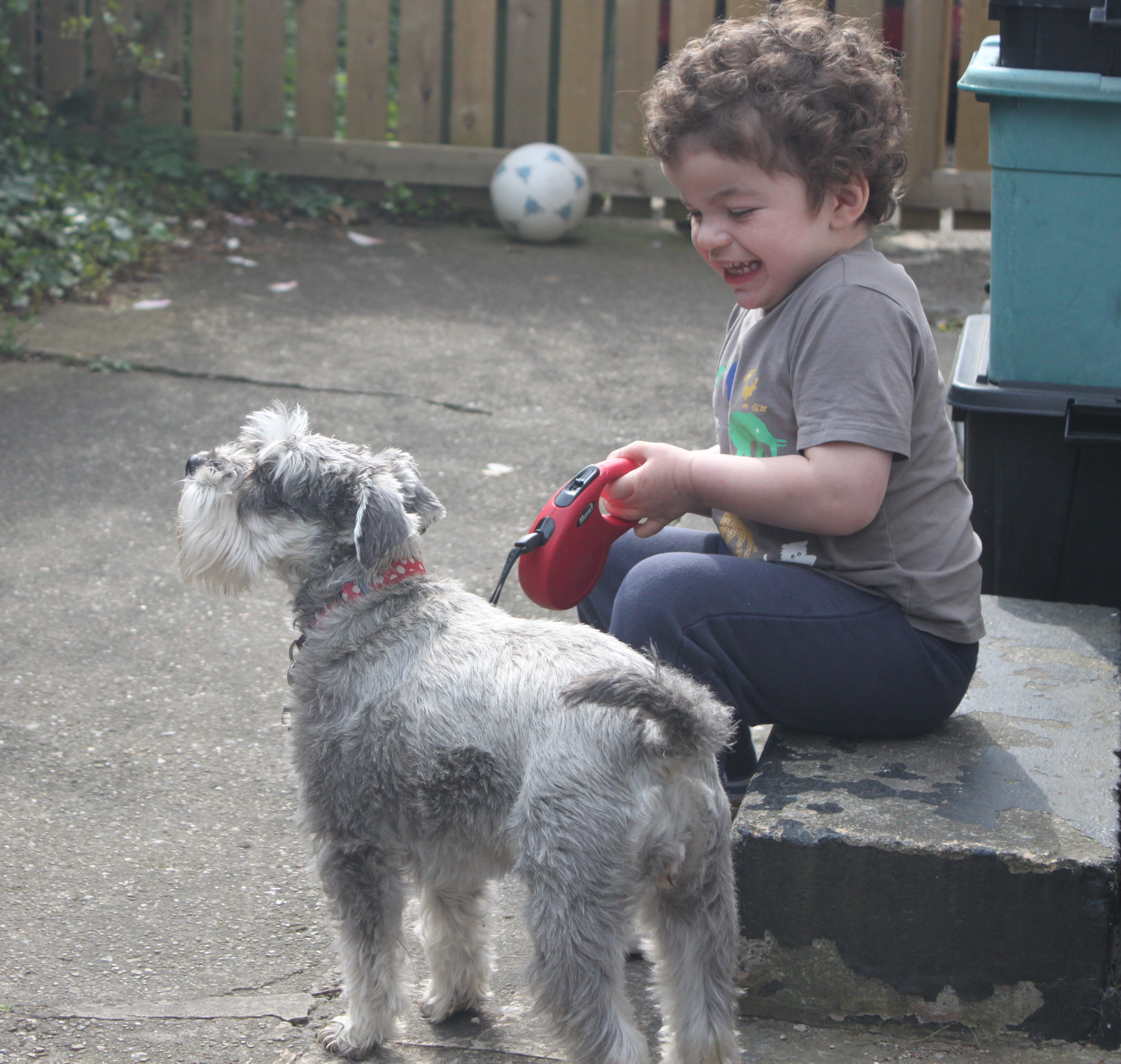
Then I heard the creak of our gate and a knock on the side door. Our lovely infusion nurse had been walking her dog past our road and decided to call in and see us. Pudding was over the moon as he adores meeting animals. He was given charge of the lead and spent a happy ten minutes wandering around the garden with her, shouting ‘doggy!’ constantly. Simple pleasures!

IMG_7949IMG_7956IMG_7952

And then at gym club, for the second week running, he sat down through most of the register without me needing to hold onto him. How well a day can turn out after the most unpromising start!

(And don’t worry, I haven’t forgotten about the 15th – more awareness posts to follow in the next few days.)