When is it ok to laugh at a disabled person?
Don’t worry, I haven’t completely lost the plot. The obvious answer is…only when they tell you it’s ok. (Or they are doing a comedy routine.)
At the moment I’m in a show based on one of C J Sansom’s books. Anyone who has read the series will know that his main character, Shardlake, is disabled. At the read-through, I knew straight away that one of the scenes would make me feel uncomfortable. Shardlake is made fun of because of his disability and most of the cast are meant to join in the laughter.
I know, acting!
Thankfully the actor playing Shardlake was lovely in his first rehearsal. He told us all to go for it, and not to feel uncomfortable. He’s a bit of a Tudor fanatic and explained that people used to believe that disability could be a sign of inner evil.
The show has got me thinking about how much has changed since then. But at the same time, how little has changed.
People with disabilities are no longer hidden away from society but yet access to many buildings or areas can still be limited. Independent travel – already an issue – is becoming more difficult with the proposed loss of station ticket offices. Developers still get away without considering all access requirements in some new build projects. I love that the script writer put a reference into the play that there is ‘no welcome for the lame’ even now. Even aside from availability of disabled parking, some people feel entitled to use the limited spaces themselves – ‘it’s after 7pm, anyone disabled won’t be out at this time’ etc (yes, you do indeed get these sort of comments.)
Disabilities are more widely represented on TV now – thank you, Strictly Come Dancing and CBeebies! – but equal access to acting roles has a way to go. Where a disabled character is featured it is often a stereotype of someone ‘overcoming’ their problems, or being seen as an object of pity, rather than a positive representation of a character going about their normal life. (Another kudos point for this production is their Access programme, meaning that a wide range of people with different abilities have been included.)
There are many other examples I could mention – you don’t have to look hard to find them. But what is truly distressing are the attitudes that lead to them. In some cases it’s ignorance or lack of awareness leading to the problems not even being considered. But scrape the surface and there are much more sinister attitudes out there.
Some people may not find Rosie Jones funny, for instance. That’s fine. But what’s not fine is to laugh at the way she looks or sounds due to her cerebral palsy. People will casually fling out insults such as spaz or retard – ‘just a joke!’ – without stopping to consider what those words actually mean, and how hurtful they can be to those who they were originally used to describe.

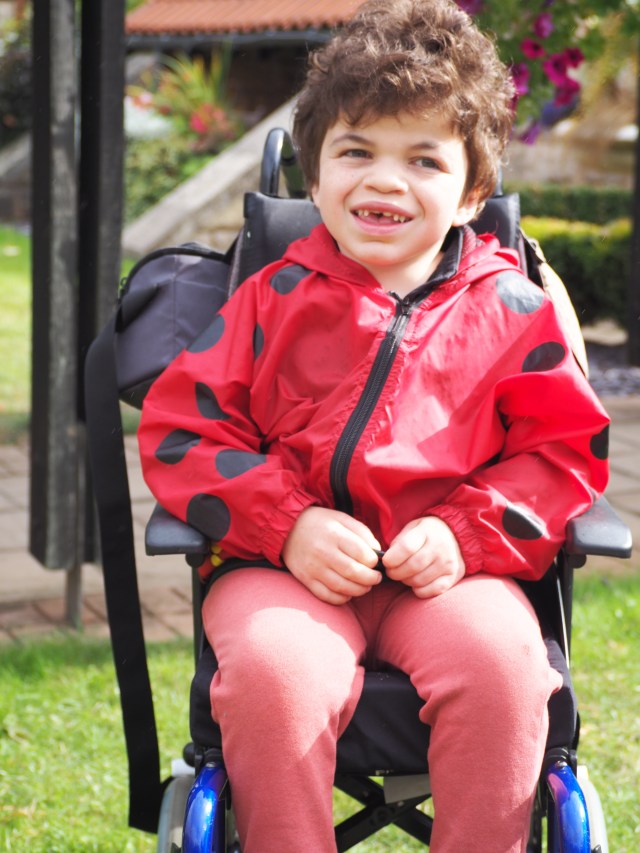
There also seems to be a hierarchy of ‘acceptable’ disabilities. Heaven forbid that you raise a child like Pudding who will never be a ‘useful’ member of society. As a family we’ve had to develop thicker skins, but when someone stares or laughs at Pudding we do see, and it does hurt. And on occasions where my writing or our story has ended up more in the public sphere, there will inevitably be some troll who wants to tell me that my gorgeous boy should have been allowed to die at birth.
I would love to see a day when disability is no longer considered to be a tragedy or a dirty word. I just don’t think it’s going to happen in my lifetime.
 A Hunter's Life