Time sponges

I always expected that when my children were old enough to go to school, I would start work again. I used to be a therapist, but stopped when Twiglet was six months old. I became a stay-at-home mum and also did childminding for Niece and Nephew. I suppose this has left me with some self-image issues but maybe that’s a whole other post!

Whatever this has meant to me, it’s probably been very useful to us as a family since Pudding’s diagnosis. I can’t think there are many employers who would be understanding about the huge number of absences I would have taken over the last year or so. Even now, I would need to find a Monday-Thursday job where they don’t mind me going to Manchester every four weeks. Oh, and only during school hours in termtime. That’s unless I put the kids into more out of school provision, and I really don’t feel that would be the right decision for Pudding at the moment.

So for now, I’m continuing to do some volunteering on a Monday and stay at home with Pudding on a Friday for his enzyme replacement therapy (ERT). I blithely thought that would leave me three whole school days to finish my novel and get loads of other stuff done.

There are many SEND parents (those who have children with special educational needs and disabilities) out there who have no choice but to work outside the home, and hats off to them.  I’m going to risk saying something I warned against in a previous post – I don’t know how they do it!

I don’t mean this in a ‘Oh my, they’re such amazing human beings’ kind of way. That goes without saying. All mums are – working or non-working, SEND or not. I mean it in a ‘how do they cope with all the time sponges?’ kind of way.
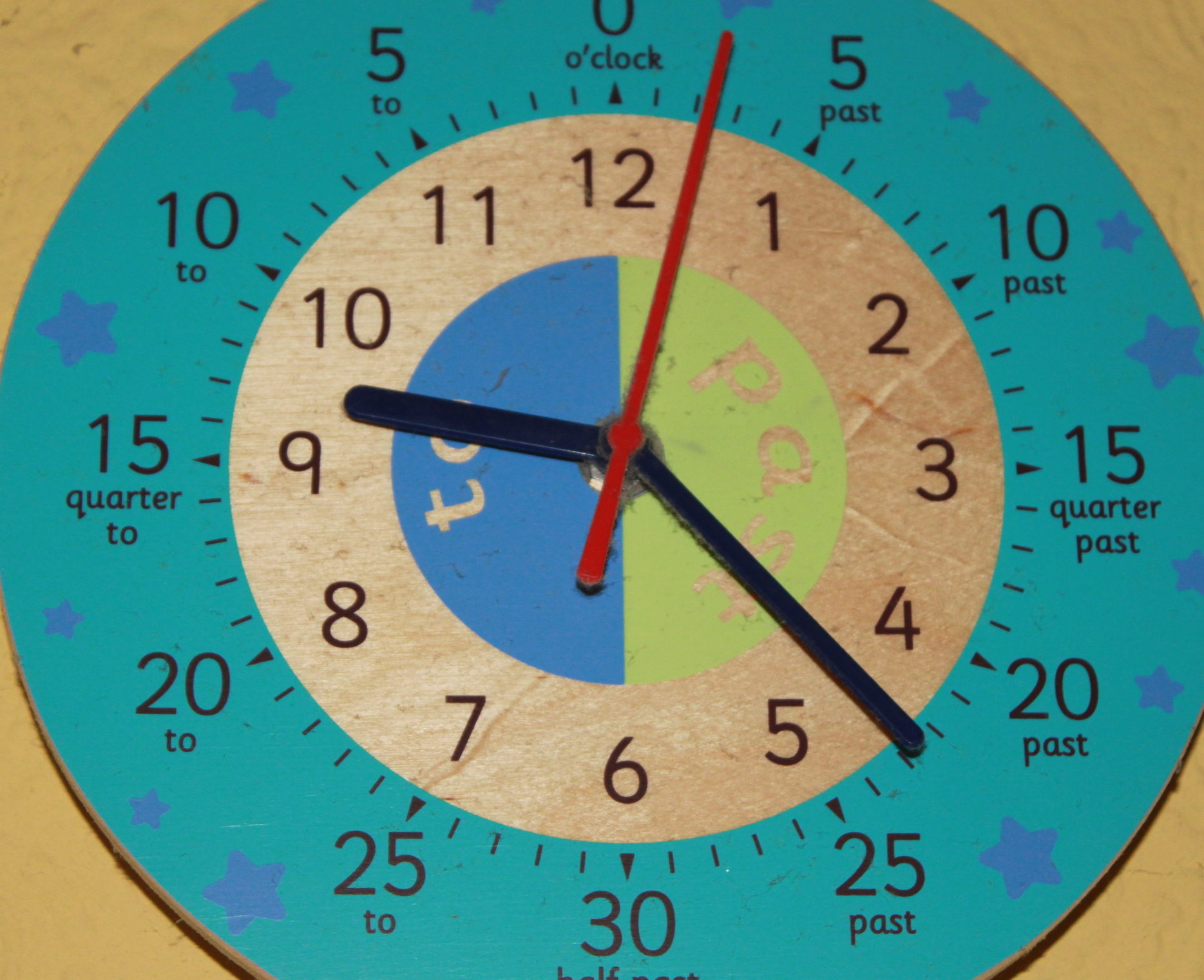
img_6720You know what I mean by time sponges? Those little things that should be simple but seem to take up a ridiculous amount of time. The sort of things like going to put some air in your tyres and then realising that actually there’s a great big nail in one which means you spend the next hour and a half getting it fixed.

We all deal with little frustrations like this (though I admit to a certain amount of huffing last week when the tyre fiasco happened). But when your child is a little bit…different, it seems like the time sponges just multiply.

Time sponges like a simple form that needs to be filled in that has two lines for ‘any health concerns’.

Like all the email arrangements that need to be made for our monthly trips to Manchester – travel, accommodation, who’s picking Twiglet up from school.

Like waiting on hold for an hour to request a lost Disability Living Allowance form.

Like trying to sort out electronic delivery of Pudding’s prescriptions to the pharmacy. An ‘easy service to sign up to’ that required three trips to the GP’s reception when no-one knew how to deal with his complicated medicines on the system.

Sometimes school run rolls around and I can’t believe how little I’ve managed to achieve. The thought of trying to do all this stuff on an evening when the kids are in bed or during a snatched lunch break just defeats me. I reckon the only feasible solution would be to wait for the time machine that Twiglet has promised to invent for me. Until then I’ll just have to get better at multi-tasking. I should probably be doing the cleaning while waiting on hold with someone right now.

PS. I admit it, I don’t always use my time as efficiently as I could. But sometimes a morning of hot chocolate and chat is a sanity saver…
 

Products that I love

This is a post I’ve been meaning to write for ages but never quite got round to. One thing I found when I joined the strange new world of additional needs is that I had no clue what sort of products were available to help us. Not the big equipment sort of things like special needs buggies or high chairs – occupational health and physio have been great with those. But the sort of products that fulfill a need many parents aren’t even aware of. Some of these products were recommended by other parents of disabled children, others I have come across myself. Parents of toddlers may also like them! Sorry about the bad quality photos but still waiting for our camera to be sorted out.

Click on the title for each product to take you through to the company. Mostly these are in the UK, apart from Dr Barman’s which are also available on Amazon, etc. (I’ve not received any freebies or payment for promoting these – purely writing this as I hope that others may benefit too.)

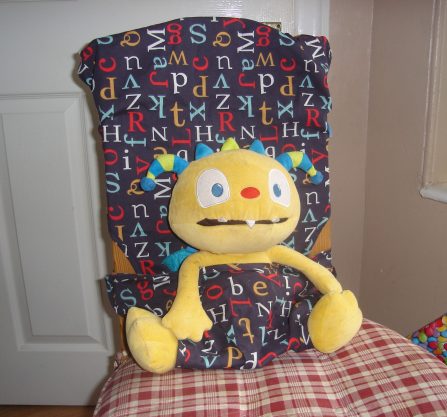
dsc00121Tot seat –  This has been a fairly recent purchase. Pudding doesn’t like staying in one place too long (even during his favourite activity which is eating) but settles down when he is secured in.  He is getting far too big for standard high chairs and meals out had become punctuated by dashes to recapture him. Not ideal, particularly when I was managing him by myself on visits to Manchester. I knew there must be a solution out there somewhere, and found this – a cloth ‘chair’ that fits over every seat that I’ve tried it on and fastens at the back to keep him secure. All the pictures on their website were of it being used by babies or toddlers so I got in touch to ask about whether it would be suitable. The reply came back very quickly explaining that other parents of special needs children had found it useful too. The adjustable straps mean it can fit many different builds, though you do have to be careful not to leave them alone where the child could tip the chair over. I went ahead with the purchase and have not been disappointed. It’s simple to use, very portable and makes eating out so much easier.

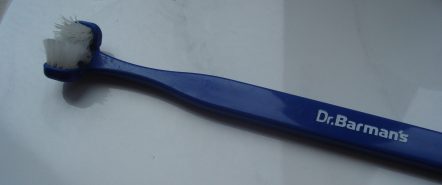
dsc00122Dr Barman’s ToothbrushI used to despair of keeping Pudding’s teeth even vaguely clean. If he wasn’t running away, he was chewing the brush and I knew that 20 seconds of brushing wasn’t going to win me any medals from the dentist. A discussion in one of my Facebook groups led to buying this toothbrush. Three heads that can brush all the teeth surfaces at once? Oo, yes please! (I have found that it tends to get a bit gunked up, but combing the bits out seems to work…). Edit – nowadays there seem to be a lot more similar brushes on the market!

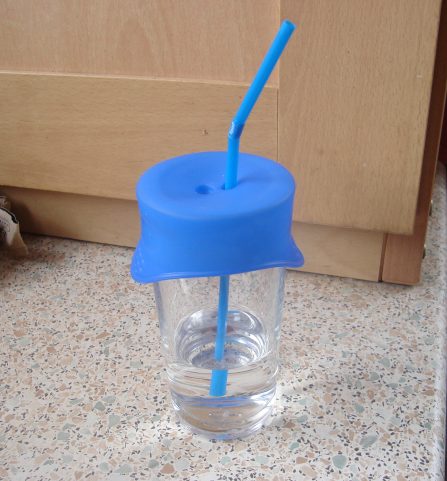
dsc00123Safe sip – this works by magic. Ok, ok, I know, that it’s actually something to do with physics. A clever little silicone top that you can stretch over any cup or tumbler. Put in a straw and hey presto! you have a non-spill cup. I didn’t believe it despite a recommendation but it really does work as long as the straw is fully in. Pudding can drink from a normal cup, but has problems with clumsiness or deliberate spilling so this is excellent to have in your bag for emergencies.

dsc00127Go To Bed covers – the duvet cover in this set zips to the bottom sheet which also has an integral pillow case. That way, nothing can be kicked off or lost in the night. Doesn’t work for everyone – as proved by someone I recommended it to – but it’s been great for Pudding. We will probably have to make the transition from cot to bed sometime soon, and I’m hoping that this will make things easier. (Not cheap, and I did try to save money at first by using his existing duvet but he kept kicking it down within the cover. The one they sell poppers into the cover and stays much more secure.) Available in single and cot bed sizes. Edit – we now use the single bed size and continues to be a hit!

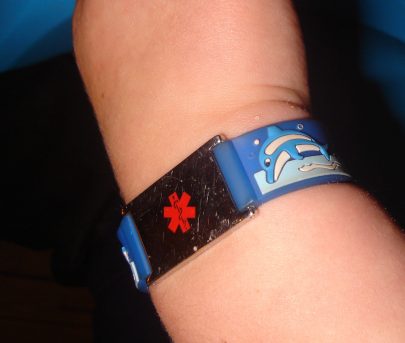
ID band dsc00128– Many of you will have gathered by now that Pudding is a bit of an escape artist. I keep a pretty close eye on him when we’re out and about, but do often worry about the ‘what ifs’ of him running off. Another worry is about a medical emergency happening when he is not with me. His key workers know the important things to be aware of, but what if someone else was handing him over to a paramedic? If his IDDD was mistaken for a normal portacath and they tried to access it for bloods, it could be nothing less than disastrous. Both these problems have been sorted by this wrist band. It has the medicalert symbol signifying important medical information. On the reverse there is space to engrave name, contact details and so on. And it looks cool too! (The company have a few different designs – this one had the most space for his complicated medical details.)

So that’s my current list of favourites – if you’ve got any other suggestions, share them in the comments!


Party!

Last week Pudding had a party to go to. One of those ‘Turning 5, and inviting everyone in the class’ sort of parties. I looked forward to it as a great opportunity to see Pudding in a large group of his peers and watch first hand as he interacted with them. It would also be a chance for me to see how he compares to them.

Thankfully, it wasn’t a party where the kids are expected to sit down and watch a magic show or something. I don’t know if I’d have said yes in that case! There was to be a DJ and bouncy castle and I decided that would be ok. (Though there is always the worry that vigorous bouncing or bumps could damage one or both of his portacaths).

The party ended up pretty much as I expected:

One child didn’t join in most of the games.

One child ran off with the parcel when it was their turn at Pass the Parcel

One child clung to their parent the whole time.

One child sat waiting for the food for ages and then had a tantrum when he was told no more crisps.

One child tried to escape out the door several times.

Can you guess which one of those WASN’T my Pudding?! Yes, the clingy one…he did all the others.

I was that helicopter parent who hovered near her child and sat down for a total of about 10 minutes. It was pretty full on! But at the same time it was kind of brilliant.

It was very apparent how much less understanding and compliant he is than his peers. But after only a few weeks of school, the other children in his class obviously accept him and his ways. Some of the boys were encouraging him to join in with one of their games. Another took it very well when Pudding was very much in her face. I saw him join in the Hokey Cokey for the first time ever and he did actually Pass the Parcel once without help. (We’ll gloss over the running away with it!)

As soon as we arrived he did head straight for the bouncy castle, but thankfully realised that he wasn’t keen when lots of other children were on it. When some of the party games and dancing were on though, he had the chance to bounce by himself. And there were balloons to chase and bubbles to pop so he was a very happy boy.

The birthday girl’s parents even took the time to learn the Makaton sign for ‘Thank you’ when we were leaving.

I did chat a bit with another mum while the kids were eating and I would have loved the chance to get to know some of the other parents too. (Because it’s hard to miss Pudding’s difference I’m sure lots of them know me, so I’m at a disadvantage!) However, I don’t really feel like I missed out. Pudding so obviously enjoyed himself that it was a joy to watch.

I’m afraid that sometimes on this blog I may focus on the negative a little too much – it’s easy to get caught up in that. But every so often I think I may be getting the hang of this ‘living in the moment’ thing. I do have a great little teacher…

Things people say

It happens to all parents of disabled children. The questions and comments from other people who don’t quite know how to interact with us now. I haven’t really had any negative comments yet but there have been a few times when I’ve been a bit stumped as to how to answer.

I think the hardest one has been someone saying (before I actually told them about MPS) ‘At least it’s not xxx, because that would be really bad.’ In those sort of situations mostly I feel sorry for whoever has said it, as I tell them a little more and they realise that Hunter Syndrome is not something to wish on any child.

Below are three of the most common things I get told and also the answer I should give if I wasn’t feeling shy/uncomfortable/too tired at the time!

I’m probably asking too many questions

To be honest, I really don’t mind. Despite being an introvert, I’ve actually always been quite open about things. The fact that I blog about our life with Hunter Syndrome shows that I don’t mind putting things out there. Mind you, the same won’t be true for everyone with a special needs child. Take your cue from who you’re talking to and as long as you’re coming from a place of genuine interest and caring, I’m sure you’ll be forgiven a lot.

It’s not as bad as what you’re dealing with

Never say this to me. Your problems are your problems, whatever they are, and as a friend I want to be there for you, just as I hope that you would be there for me. OK, if you need a good whinge about how your child is not yet fluent in Russian despite three month’s of private tutoring I might not be the best person to talk to. But that’s not very likely from my friends anyway. So please, let’s leave my issues aside for the moment, and tell me what’s bothering you. To be honest, it will probably do me some good to think about others.

I don’t know how you do it

Um…that’s a simple one to answer. I do it because I have to. Sometimes it is easy. We have our routines for treatment and trips to Manchester. He watches far more TV than I would really like.  Sometimes it is more difficult. When he wakes up and starts shouting just as I want to go to sleep myself I may mutter a few choice words. When we’re out and he disrupts some other children’s game my heart sinks as I know they might not understand. When he runs off in the opposite direction to where we just parked the buggy I have to make a snap decision as to which one to temporarily abandon. (The buggy usually wins that toss-up: whoever steals it is more likely to get some stinky nappies than anything valuable.)

It’s not the life I would have chosen. But it’s our life. He is hard work, yes, but he is also undeniably, unbearably cute. I couldn’t choose not to love him, therefore I do it because I have no other choice. You would too!


Progress

I am finally allowing myself to believe that this clinical trial is working for Pudding. Although I have seen the results that other boys have achieved, I have until now always had to remind myself that:

a) a trial is exactly that. A trial. What works for some may not work for everyone and that is why they have to test it out.

b) at the time of testing Pudding had almost the lowest possible score that would still allow him to go on the trial. With results that unpromising I had no idea whether this would effect what we could expect from the drug.

The natural course for those on the most severe end of Hunter Syndrome is for progression until some time around age 4 or 5, and then a time when skills plateau before being gradually lost. This is because the normal enzyme replacement therapy that Pudding now receives weekly doesn’t cross the blood brain barrier to work there. In the hope of stopping this regression, every  four weeks we make a trip to Manchester for a concentrated form of this enzyme to be injected into his spinal fluid to break down waste products in his brain.

Since very early on, Pudding has always continued to develop and improve, albeit very slowly compared to others in his age group. Lately it feels like his rate of progress is making a little leap, and as he gets closer and closer to his fifth birthday we have to see that as a good sign.

Most of his achievements might not seem very much to another mother of a four and a half year old, but for us they are massive. As well as continuing to add to his vocabulary, his understanding is continuing to improve. For instance, when playing ball the other day I told him to ‘Stand further back’. I had to work SO hard not to accompany it with a gesture as I wanted to check whether he understood without. And he did.

IMG_8134He can now almost finish this set of jigsaws without any help; he picks out all the bits correctly and only struggles with putting together the three-piece police helicopter. (He is also often very insistent that the policeman drives another vehicle, but I’m not going to argue about that one!)

His ability to compromise is also improving. Rather than just stubbornly demanding TV he can now sometimes be encouraged to help tidy up first.

He has got used to lots of new routines at school and has even in the last few days been able to pick out his name from amongst all the other children’s. (Not something I’ve been able to recreate at home, but again we can’t have everything!)

So I should be feeling nothing but pride in his achievements and relief, right?

Well…mostly.

Part of me (a small part) doesn’t really want the trial to work. I can hardly believe I’m actually writing this. What an unnatural parent I must be to wish away my child’s chance at life. But much as I feel bad for this I can’t brush my emotions under the carpet and pretend I never have them.

The truth is, if the trial doesn’t work then I won’t have to live with the fact that we have this chance when others don’t. Others who didn’t pass the screening, or for whom it came too late. Others like Ethan who I was so happy to meet only a few weeks ago but who is currently having a hard time of it. Other mothers’ sons all around the world who deserve a chance too.

I know that allowing my child to suffer will not alter the suffering of others, so of course we will continue on this path. I hope it is proved to work. I hope the NHS will accept it as a treament. But I will continue to feel guilty about it.

So I ask of you, please celebrate with us when things are going well, but don’t forget the rest of our MPS family. I’m grateful for this trial, I truly am, but it is only a stop-gap. A far from ideal solution. We need a cure.

A world without…?

Last week I got round to watching a programme I’d recorded – ‘A World Without Down’s Syndrome?’ In it Sally Phillips, who herself has a child with Down’s Syndrome, raises concerns that a new highly accurate screening test will lead to an increase in the rate of abortions of those identified with Down’s (which is already at 90%).

It was an interesting programme and one which raises lots of questions about choice and the knowledge that can inform that choice. For myself, as an older mother I was well aware of the ‘risk’ in my own pregnancies. Having had contact with the Down’s community previously I think I was less scared about this prospect than some other mums would be and refused the testing that was already available. Partly because I knew the limitations of the test itself and also because I would not have aborted anyway.

Watching the programme though, I couldn’t help but think of our situation now. I was prepared to deal with a Down’s diagnosis at birth, but to be hit with the bombshell of MPS when he was three years old was never on my radar. So if I’d been told when pregnant that my child would have this progressive and life-limiting condition what would I have done?

I don’t think I could have faced the prospect of heartbreak and devastation, the weekly treatments, the uncertainty of this diagnosis. How could I put myself and our family through that, let alone the child itself who would have to become more familiar with operations and needles and blood pressure cuffs than I would ever want to?

But of course we never had that choice to make, and I am very glad I didn’t have to. If I had, and found out now that gene therapy could be available in Pudding’s lifetime, I don’t know how I would feel.

Even taking away that prospect, I couldn’t contemplate life without him, knowing now how much I love this bundle of trouble. Last year I wrote that I would change his Hunter’ Syndrome in an instant. That’s still true on a medical level – if I could save him from the needles and us from the worry, I certainly would.

But now I do have more understanding of the other SEN parents who say they wouldn’t change theirIMG_8306 child for the world. Without Hunter’s, he wouldn’t be the boy who makes his TA’s face shine with pride when she shows me his latest ‘drawing’. He wouldn’t be the boy who in a few short weeks has made himself known and loved throughout the school. He wouldn’t be the same boy who makes me melt with love every time I look at him. He simply wouldn’t be my Pudding.

Potentially he could perhaps be a more ‘useful’ member of society. But then he could also have the potential to bully other children, drive dangerously, become addicted to drugs, or many other harmful things.

As medical science moves on apace, soon (even now) they will be able to screen for all sorts of things, from genetic markers for disease through to intelligence. What is right? Where do we draw the line? And who gets to decide?

I don’t have the answers myself. All I do know is that if pregnant me could see current me she would probably still be terrified about the prospect of MPS and all the troubles that it brings. But she would also see the smiles, and the hugs, and the kisses. And the overwhelming love. And I think that would make all the difference.

Guessing games

This morning Pudding woke up crying. I hear him whimpering in his cot and go to get him out. When I bring him downstairs he sits on the sofa, his normally cheerful face red, contorted and tear-streaked.

Cuddles make no difference.

Even breakfast doesn’t tempt him.

Was it a bad dream? Was he feeling sick? Was it something else?

I put on the TV and Twiglet finds his favourite show, ‘Sarah and Duck’. The magic box soothes him, the storm passes and a few minutes later he starts on his cereal. I hover with towels and sick bowl at the ready, just in case.

It is this that I hate most about having a minimally verbal child. That I never quite know what is going on for him in his times of need. That I have to play the guessing game. That even when he does talk I don’t always know what he’s trying to say. No matter how many times he earnestly repeats ‘De de de Doo’ at me, I haven’t a clue what it means though I know it’s obviously important to him.

I know we’re better off than some. His language is improving all the time, slowly increasing in vocabulary and clarity. He can now put two words together, though only in limited situations. And I am hopeful that he will continue on this path.

Of course it would be fabulous one day to hear ‘I love you, Mummy’. But he doesn’t really need to tell me that because his actions tell me that every day. What I would love him to say even more is ‘Tummy hurts’. Words like that could make such a difference.

He’s fine again now by the way, sick bowl still unused. I’m just faced with the problem of how to turn the TV off without becoming very unpopular again.

Meetings

The last two weeks have had a beautiful synchronicity (though I suppose that’s not really the right word as I knew both events were happening).

I have had the honour of meeting two lovely mothers and their sons who live with Hunter Syndrome just like my Pudding.

The newbie

Last week in Manchester I met up with C and her little boy who was diagnosed in July, almost a year to the day after Pudding. A few weeks after they heard the news, our specialist nurse put us in contact with each other. I’ve done my best to support her through this difficult time, letting her know what to expect and how we’ve got through the first year. I know she has also appreciated having this blog to read – making my decision to write it even more worthwhile.

It was fabulous to meet her and give her a hug in person. Her boy is a little sweetie and enjoyed playing hide and seek in the ward curtains with Pudding. What she probably doesn’t realise (though will now!) is how much I too have benefited from my contact with her. It feels a little selfish but it’s as if I’m going back a year ago and telling myself the things I needed to hear, partly rewriting the horrible time when we felt so alone and isolated.

The old hand

Then this week I flew to Ireland to meet Geraldine and Ethan. I stumbled across Ger’s blog a few months into our own diagnosis journey, left a comment and was welcomed wholeheartedly. She introduced me to the online community and was the first person I could turn to for advice.

Since then, we read each other’s writing and message a fair amount so I felt like I already knew her. We had one and a half days of wandering around her lovely hometown, drinking in the sea air and being blown along the prom, eating, shopping and talking almost non-stop. She was just as kind and funny and generous as I expected. And of course I got to meet her boys.

I thought dsc00104I knew what to expect when I met Ethan. He had more language than Pudding when he was little and was a whizz at jigsaws. But he wasn’t diagnosed until he was gone five and then they had to battle for six months to get enzyme treatment for him. Sadly he wasn’t able to join the clinical trial that Pudding is on. Now he’s 14. I knew his fingers would be curled in. I knew that he was using a wheelchair more and more. I knew that his language had mostly gone. I knew that swallowing certain foods was becoming more dangerous. I knew that he likes his own space and can hit indiscriminately. Mostly I worried that I wouldn’t know how to interact with him, but I needn’t have done.

When he came in the door, Ethan made a beeline for me, took my hands in his gentle ones and looked directly at me. What I hadn’t known was how beautiful his eyes are and how much he still wants to communicate even though MPS is robbing him of so many things. I was privileged to sit on the couch to eat toast together and watch The Simpsons. I stroked his back and felt at peace.

Deep down I have always been scared that if Pudding got to the later stages of progression in Hunter Syndrome I wouldn’t know how to connect with my own child. That I would be too horrified at the changes to recognise him and love him still. Ethan taught me a valuable lesson – that he is still very much there and lovable. I am so glad I got to meet him.

Another RIP

Most of the time lately I’ve been able to feel very positive despite the sword of MPS hanging over us.

Pudding is on the trial and we know that this could mean his future is very different from other Hunter’s boys that have gone before him. Even if the trial doesn’t work for him he would have years ahead of him.

Tonight it’s a little harder to stay positive. Tonight the MPS community mourns again.

Ray was 7 years old.

We need a cure.

Hospitals (and play)

I have a little luxury that I indulge in when we’re in Manchester if it’s a long day or we’re there two days running. Our visit last week was a long long day. There was a problem in Pharmacy making up the drug so Pudding wasn’t given his dose until three hours later than usual.

(Because the drug is injected into the spinal cord it means that there would be severe consequences if any infection was introduced with it. The drug is made up in the aseptic lab – think protective clothing, disinfection, working in sterile environment – and if anything goes even slightly wrong they have to start again.)

If I’m stuck anywhere for any length of time I start to go stir crazy and hospitals seem to exacerbate that. There is always a lot of waiting around – waiting for the next set of observations, waiting for the dose, waiting to see if he reacts badly – and we’re powerless to really do anything much. So what I do is take a walk to the M&S Food Shop for a nice sandwich and maybe even a pudding. It is a definite improvement on the canteen food, but that’s not the luxury. No, it’s the short walk there, and more importantly leaving the building. I go the long way round and cut across the grass. Even though there are no signs saying you shouldn’t I still feel guilty but it’s worth it. The chance to walk outside and gaze at lush green nature, even if it is only a tiny patch, is priceless and is my healing.

Not that Manchester Children’s Hospital is a bad place. I’ve not got much to compare it to having never stayed in one myself, but if you have to spend a lot of time in any hospital I recommend it. It’s pretty bloody brilliant. It was purpose-built in 2009 and obviously has the needs of children very much at its heart. There are toys and cartoon characters everywhere, clown doctors doing their rounds, visitingSmiling lady with a birthday hat on playing with a transformer celebrities and amazing staff…

The most important people though, at least as far as the kids are concerned, are the play specialists. Nope, I hadn’t heard of them either until recently. These wonderful people have a background in childcare but now work in the hospital to offer all sorts of opportunities for play – distracting children from the procedures they are facing and supporting families. And oh my word, they are worth their weight in gold!

The first thing most kids ask when they get onto the research ward is ‘Where’s Emma?’. Non-verbal children like my Pudding rush to give her a hug. She makes each and every one of them feel special and loved. Of course, the nurses do a brilliant job too, but they have to focus on the clinical side and have loads of admin to do as well, so Emma gets to be the fun one. She provides DVDs, spare batteries and wifi, arranges the chill-out room for the teenagers and messy activities for the young ones. She has an enormous smile that never disappears. (And she’s even been known to clean up vomit when the need arises.) Pudding has one T-shirt that says ‘Mad as a box of frogs’ and we have always joked that she should have one too. Madcap indeed, but exactly what we need to keep us all sane in stressful circumstances.