As I watch some children of my acquaintance grow up into teenagers, I see them hit that squirming self-conscious don’t-notice-me phase. I remember it so well. Some adolescents breeze through it and enter adulthood with barely a glance back. Others, like me, never seem to shake it off.
I’ve spent much of my life worrying about what others think of me. (Thanks very much to the bullies at school who shook my self-confidence so thoroughly.) Will people still like me if I say this? What do I look like in that? Etc, etc.
Sensitivity to what other people think got heightened when Pudding’s development delay first started becoming obvious. Any trip out the house became fraught with new worries. What did people see when they looked at him? At me?
A helicopter mother, hovering over her child as he climbed the steps, not giving him the space to do it himself? They could have no idea that his balance wasn’t great and that he had a permanent bump on his forehead from the number of times he had fallen.
Someone who is not concentrating on the conversation going on around her? Even when I let Pudding stray a bit further away from me I’m always watching – aware that at any moment he could hit another child or make a dash for the gate.
A lax parent? If they do see Pudding hitting out or running away they might think I should do more to discipline him. But often when I do tell him off it’s more for the benefit of others. ‘Bad’ behaviour in Pudding is often impulse and no amount of discipline will make a difference.
Too stand-offish? Seeing me standing by myself amongst groups of sociable parents, they could think ‘up herself’. Yet all my thoughts were on the latest clinical results, or concentrating hard on not crying on the school run.
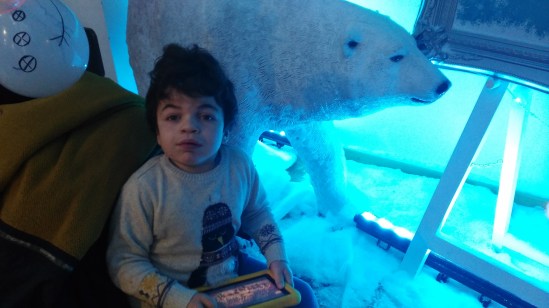
Uncaring? A stranger on the train seeing me scrolling through my phone while Pudding is stuck in his chair watching his tablet and shouting out might expect me to do more to entertain him or keep him quiet. But they would never know that while their journey is briefly disturbed, this is yet another necessary journey to hospital and a film is the only way to keep him calm.
 It now happens less and less as I’ve developed a thicker skin on this journey (though I still hate the train situation!). It’s brought out my sarcastic side at times. In the supermarket recently I did say loudly to Pudding, ‘Don’t shout like that or people might stare!’ As we were leaving T very astutely said to me, ‘People were staring anyway, Mummy.’ Not after I said that, they didn’t!
Of course the vast majority of people probably don’t even give us a second thought, let alone think something negative. But my worries about people’s opinions will always be with me at some level, and those who sneer at Pudding or look askance at me will always hurt. But I know that most important are the opinions of those who are close to us. Those who know and love us for who we are. The nurses and play specialist who snuggle with him and insist on me taking a break. Friends who invite us out despite us not having made it out on the previous twenty-three occasions. Family who are always there for us.
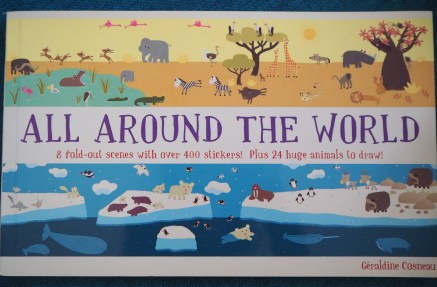 Oddly the thing that made me realise it was this book. I bought it five years ago, long before Pudding’s diagnosis and intended to give it to him when he’d grown up enough to be able to use it. Every year I have looked at it in my present drawer and known that time hadn’t come yet. He is nearly seven now, and I’m not sure he will ever reach the stage of being interested/able. And it’s time for it to go to someone else. Previously when I’ve given away a part of the life he will never lead, it has been almost a physical hurt. An arrow to the heart that says, ‘This wasn’t what you expected’. But this time? Acceptance with a smattering of fond nostalgia.
 We’ll do some Christmassy trips out in the next few weeks and I may post pictures of Pudding smiling at Santa Claus (why wouldn’t he? Pudding loves meeting people and getting attention. A big beardy man in a funny suit is no exception.) But if we didn’t do any of that he wouldn’t feel like he was missing out.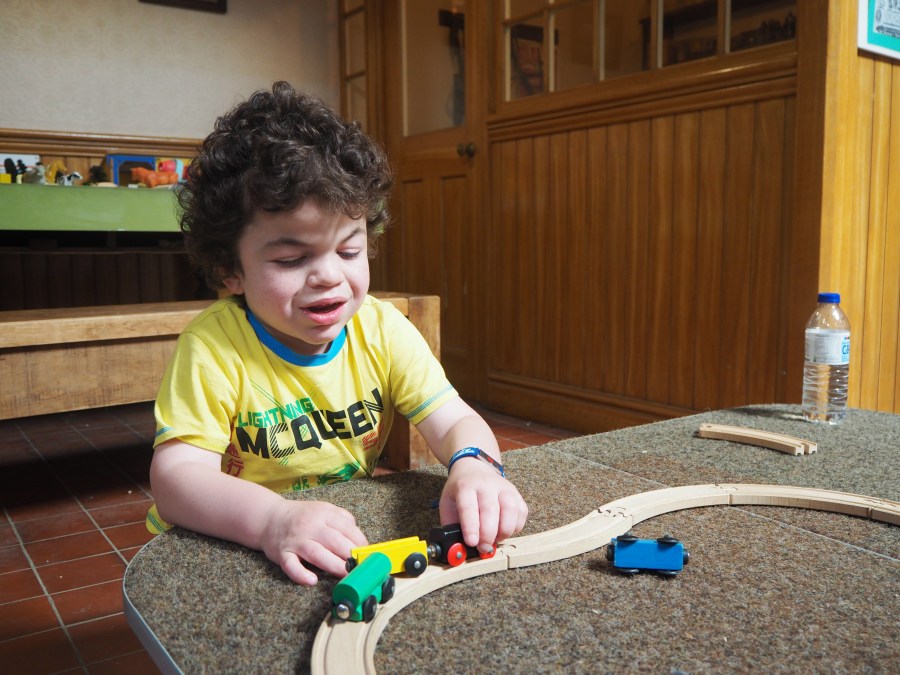
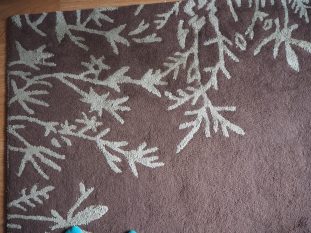 But still those fears nibble away at me. ‘It can all fall through at the last minute’. ‘You’ll have to start all over again’. At least one bonus about our current health concerns is that Pudding seems to have stopped getting much taller at the moment, so is less likely to grow out of his current bed and small room… Maybe another year in this house is possible. And I won’t yet have the wrench of leaving the house where both my boys were born. (Technically as we’re taking the rug with us I could still point and say “that’s where it happened”!) Though I’ve already had the tears when I painted over their height marks on the wall.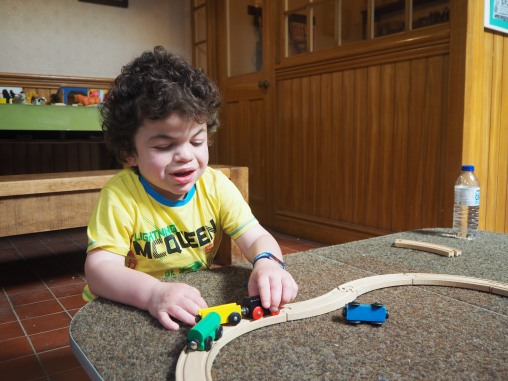
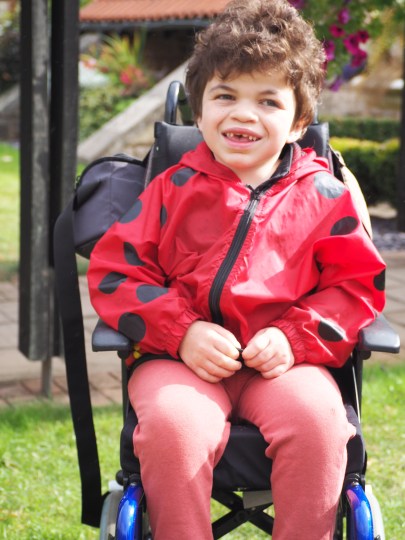 We did talk about various options to stop this happening, but also there was the knowledge that he wasn’t getting any smaller and would eventually outgrow the buggy anyway. The physiotherapist got a wheelchair out for him to try and his little face when he climbed into it… Well, I knew that it was the right thing!
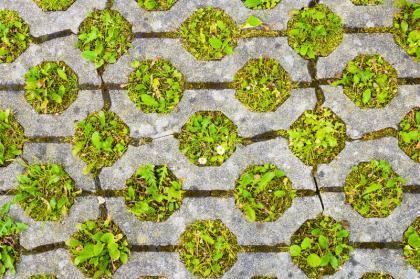 The accessibility (or not) of the built environment has become much more obvious to me. The little wheels at the front of the chair make it a bit harder to negotiate small obstacles than with the buggy. (Drivers please note: dropped kerbs are there to make it possible for wheelchair users to get around – if you park over them it might save you 30 seconds but take someone else far longer to find a different route). And I never knew that some surfaces are near impossible to get across. My unfavourite so far is this sort of surface used around the accessible parking bays in a place near us.
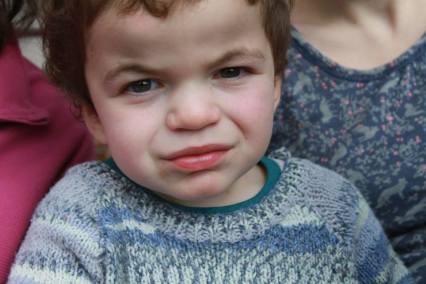 He may not ever find ‘the one’ special person in his life. But to him, everyone is special.
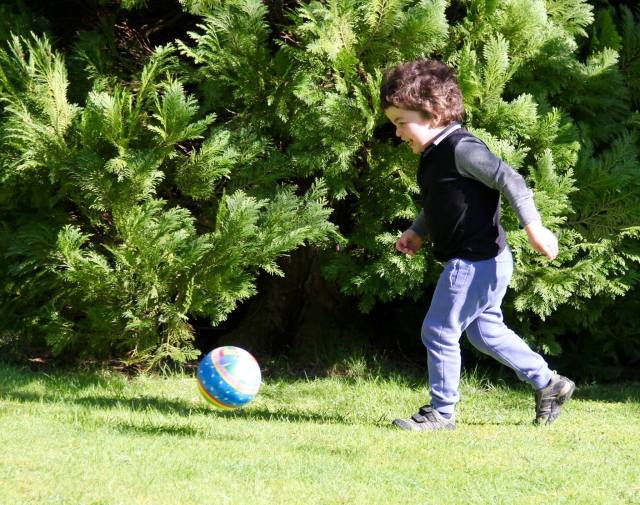 His joy in football is infectious. And I’m happy to meet him there on his own terms.
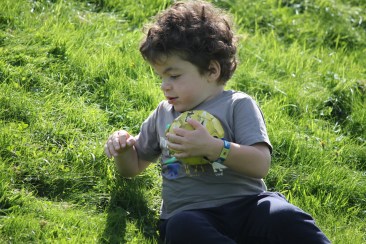 No, what I’m talking about now is the way other children react to Pudding. I judge them by the way that they judge him.
 A Hunter's Life